
Xiaomi Redmi 14C
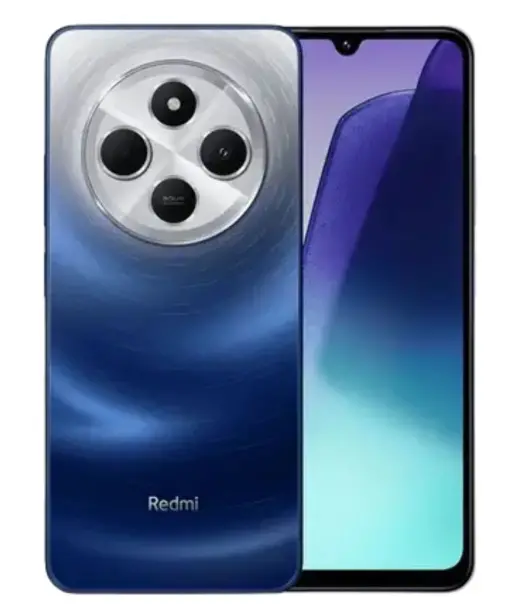
A budget-friendly phone with decent performance and camera capabilities
Xiaomi Redmi 14C Full Specifications
| Launch & Availability | |
| Released | 30 August 2024 |
| Announced | 2024, August 30 |
| Status | Available |
| PTA Approved | Yes |
| Network | |
| Technology | GSM / HSPA / LTE |
| 5G Support | No |
| 2G Bands | Yes |
| 3G Bands | Yes |
| 4G Bands | LTE |
| Body & Design | |
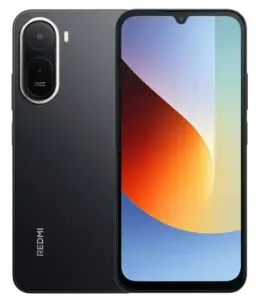
| Dimensions | 171.9 x 77.8 x 8.2 mm |
| Weight | 204 g |
| Build | Glass front (Gorilla Glass 3), plastic frame, glass back or silicone polymer (eco leather) back |
| SIM | Nano-SIM |
| Colors | Midnight Black, Sage Green, Dreamy Purple, Starry Blue |
Phones with Similar Specs

| Display | |
| Type | IPS LCD, 120Hz, 450 nits (typ), 600 nits (HBM) |
| Size | 6.88 inches |
| Resolution | 720 x 1640 pixels (~260 ppi) |
| Refresh Rate | 120Hz |
| Protection | Corning Gorilla Glass 3 |
| Platform | |
| Operating System | Android 14, HyperOS |
| Chipset | Mediatek Helio G81 Ultra (12 nm) |
| CPU | Octa-core (2x2.0 GHz Cortex-A75 & 6x1.8 GHz Cortex-A55) |
| GPU | Mali-G52 MC2 |
| Memory & Storage | |
| RAM | 4GB, 6GB |
| Storage | 128GB |
| Card Slot | microSDXC (dedicated slot) |
| Storage Type | EMMC 5.1 |
| Main Camera | |
| Camera | 50 MP, f/1.8, 28mm (wide), 1/2.96", PDAF 50 MP, f/1.8, 28mm (wide), 1/2.76", 0.64µm, PDAF |
| Megapixels | 50 MP |
| Features | LED flash, HDR |
| Video | 1080p@30fps |
Similar Price Phones


| Selfie Camera | |
| Camera | 13 MP, f/2.0, (wide), 1/3.06" |
| Video | 1080p@30fps |
| Battery & Charging | |
| Capacity | 5160 mAh |
| Type | Li-Ion |
| Charging | 18W wired, PD |
| Wireless Charging | No |
| Sound | |
| Loudspeaker | Yes |
| 3.5mm Jack | Yes |
| Connectivity | |
| WLAN | Wi-Fi 802.11 a/b/g/n/ac, dual-band, Wi-Fi Direct |
| Bluetooth | 5.4, A2DP, LE |
| Positioning | GPS, GLONASS, GALILEO, BDS |
| NFC | Yes |
| USB | USB Type-C 2.0, OTG |
| Radio | FM radio |
| Features & Sensors | |
| Sensors | Fingerprint (side-mounted), accelerometer, compassVirtual proximity sensing |
| Fingerprint | Side-mounted |
| PUBG / Gaming | 40FPS |
| AnTuTu Score | 262,000 |

Specifications are collected from the manufacturer and other reliable sources and may change without notice.
Pros & Cons
What we like
- Smooth 120Hz display for fluid scrolling
- Good battery life for daily use
- Dual 50MP cameras capture decent photos
- Dedicated microSD slot for storage expansion
What could be better
- Low resolution display lacks sharpness
- eMMC storage slows down performance
- No 5G support for future-proofing
- Slow 18W charging is underwhelming
Xiaomi Redmi 14C Review & Overview
The Xiaomi Redmi 14C was officially released in Pakistan on August 30, 2024, and it is fully PTA approved, though buyers should still verify the IMEI before payment. As of August 2026, its starting price is around Rs. 29,999 for the base 4GB/128GB variant, while the higher 6GB/128GB model goes up to approximately Rs. 39,999. Its main specifications include a 6.88-inch IPS LCD 120Hz display, MediaTek Helio G81 Ultra processor, up to 6GB RAM, a 50MP dual camera, and a 5,160mAh battery.
Display
- 6.88-inch IPS LCD panel — offers one of the largest screens in its price class.
- 120Hz refresh rate — makes scrolling and app transitions feel noticeably smoother.
- 720 x 1640 resolution — keeps everyday content acceptable at this budget tier.
- 600-nit HBM brightness — helps visibility under moderately bright conditions.
- Gorilla Glass 3 protection — guards against everyday scratches and light drops.
The massive 6.88-inch display makes this phone genuinely comfortable for videos, browsing, and gaming, though the HD+ resolution means text and images aren't as sharp as on Full HD or AMOLED rivals.
Processor
- MediaTek Helio G81 Ultra chipset — built on an efficient 12nm process.
- Two Cortex-A75 cores at 2.0GHz — handle everyday multitasking adequately.
- Six Cortex-A55 cores — manage lighter background tasks efficiently.
- Mali-G52 MC2 GPU — supports light-to-moderate mobile gaming.
- Improved efficiency over Helio G85 — offers a modest generational upgrade.
The Helio G81 Ultra comfortably runs WhatsApp, social media, and light gaming, though heavier titles will need reduced graphics settings for consistently smooth performance.
RAM & Storage
- 4GB, 6GB, or 8GB RAM options — cover a wide range of usage needs.
- 64GB, 128GB, or 256GB storage — suit both light and heavy media users.
- Dedicated microSD slot — expands storage without sacrificing a SIM slot.
- eMMC 5.1 storage — offers standard, dependable read/write speeds.
- HyperOS optimization — helps keep multitasking responsive on lower RAM tiers.
The dedicated memory-card slot is a genuine advantage, letting buyers keep both SIM cards active while still expanding storage, and the higher RAM variants noticeably improve everyday multitasking smoothness.
Camera
- 50MP main sensor — captures clear, detailed shots in daylight.
- Auxiliary rear lens — supports the phone's basic dual-camera setup.
- 13MP front camera — handles selfies and video calls adequately.
- HDR support — improves detail in high-contrast lighting scenes.
- LED flash — assists basic low-light and indoor photography.
Daylight photos from the 50MP sensor look reasonably sharp for this price range, though low-light performance remains average and the setup lacks any ultrawide or telephoto flexibility.
Battery
- 5,160mAh battery — comfortably lasts well beyond a single day of use.
- 18W PD wired charging — refills the battery at a modest, steady pace.
- Large capacity — supports heavy video and social-media usage without frequent charging.
- Efficient chipset pairing — helps extend overall screen-on time.
- USB Type-C port — provides a modern charging connection.
The large 5,160mAh cell is one of the phone's strongest selling points, easily stretching into a second day of lighter use, though the 18W charging speed feels slow compared to faster-charging rivals.
Software
- Android 14 out of the box — provides a modern, current software base.
- HyperOS — adds Xiaomi's latest interface with improved efficiency.
- Google Play support — gives full access to popular Android applications.
- Regular security patches — keep the device protected over time.
- AI face unlock — adds a quick secondary unlocking method.
HyperOS brings a cleaner, more efficient experience than older MIUI versions, and Android 14 out of the box keeps the software feeling current for a budget device.
SIM & Connectivity
- Dual Nano-SIM support — keeps two Pakistani numbers active simultaneously.
- 4G LTE connectivity — works reliably across major local networks.
- Dual-band Wi-Fi with Wi-Fi Direct — supports stable wireless connections.
- Bluetooth 5.4 — improves pairing speed and connection stability.
- NFC support — enables tap-based payments where available locally.
- USB Type-C with OTG — allows connecting external accessories directly.
Connectivity is solid for a budget device, with NFC and dual-band Wi-Fi giving it a practical edge, though the lack of 5G is expected at this price point.
Design & Build
- 8.2mm profile — feels substantial given the large battery and display.
- 204-211g weight — remains manageable despite the phone's large size.
- Four color options — offer both bold and understated tones.
- Side-mounted fingerprint reader — provides quick, accurate unlocking.
- Glass front with plastic frame — balances durability and affordable cost.
- Dust and splash resistance — adds practical everyday protection.
The Redmi 14C's design feels solid for its category, and while it isn't rated for full water resistance, the dust and splash protection offers useful peace of mind for daily handling.
Final Words
The Xiaomi Redmi 14C stands out mainly because of its massive 6.88-inch 120Hz display, long-lasting 5,160mAh battery, and Xiaomi's modern HyperOS software. These strengths make it a strong pick for buyers who prioritize screen size and battery endurance over raw performance.
The Helio G81 Ultra chipset and flexible RAM options handle everyday apps and light gaming comfortably, though the HD+ resolution and slow 18W charging are clear trade-offs at this price. The 50MP camera performs decently in daylight, but low-light shots remain basic, as expected in this segment.
At a starting price near Rs. 26,999, the base variant offers strong value for buyers wanting a large screen and long battery life. Higher RAM variants, priced up to around Rs. 39,999-65,999 depending on configuration, are worth it mainly for buyers needing extra multitasking headroom and storage.
Alternatives to the Xiaomi Redmi 14C
Realme Note 50 — priced around Rs. 21,999 with 4GB RAM and 64GB or 128GB storage, offering a similar budget experience with a dedicated microSD slot and comparable battery life.
Xiaomi Redmi 13C — available near Rs. 27,999 with 4GB or 6GB RAM and 128GB storage, appealing to buyers who want a slightly more compact design at a similar price.
Infinix Hot 40 — costs around Rs. 29,999 with 8GB RAM and 128GB storage, making it a solid pick for users prioritizing extra RAM and faster charging speeds.
User Reviews
Write a review →No reviews yet
Be the first to share your experience with the Xiaomi Redmi 14C.